Reverse Line Movement: NFL Bettors' Secret Weapon Against Public Fads
Harper Lehmann · Apr 5, 2026
Reverse Line Movement: NFL Bettors' Secret Weapon Against Public Fads
Unpacking the Basics of Reverse Line Movement
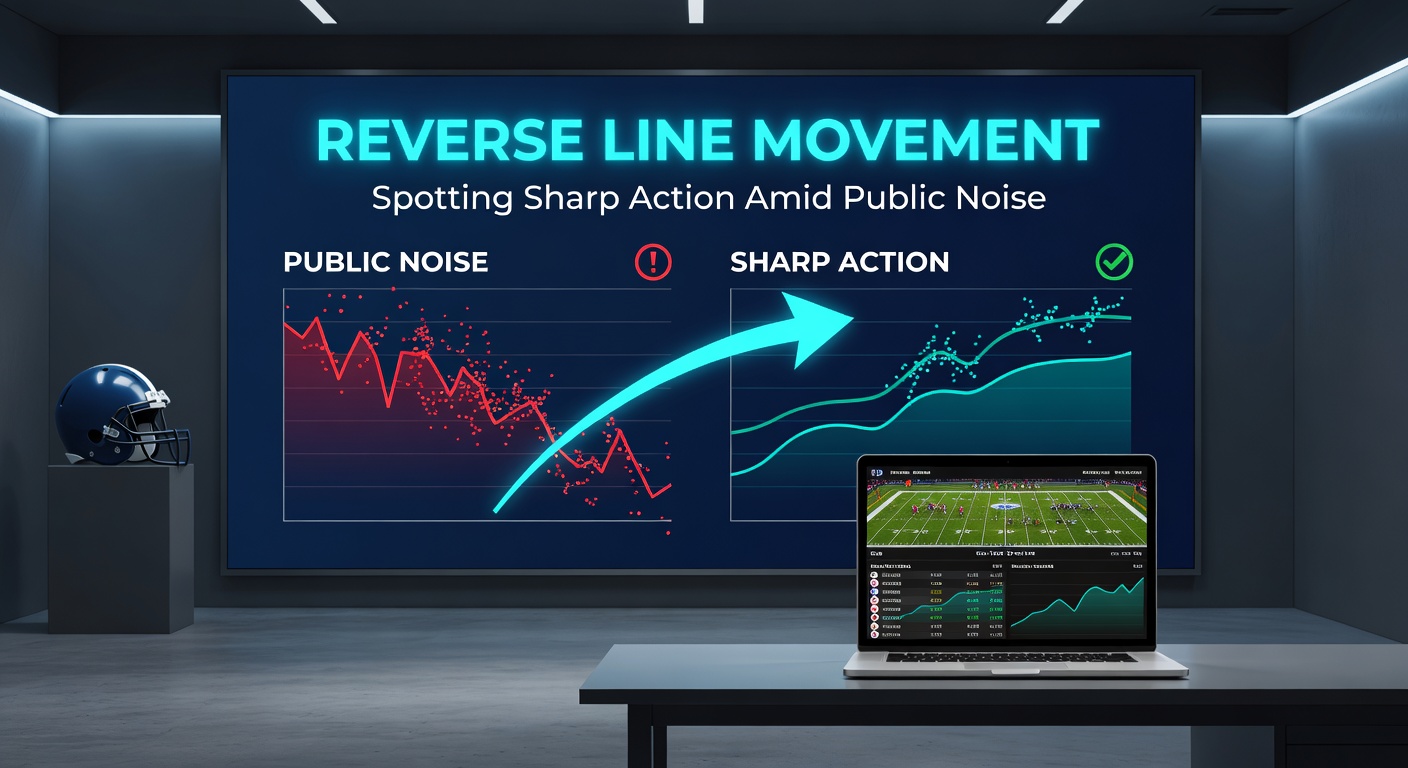
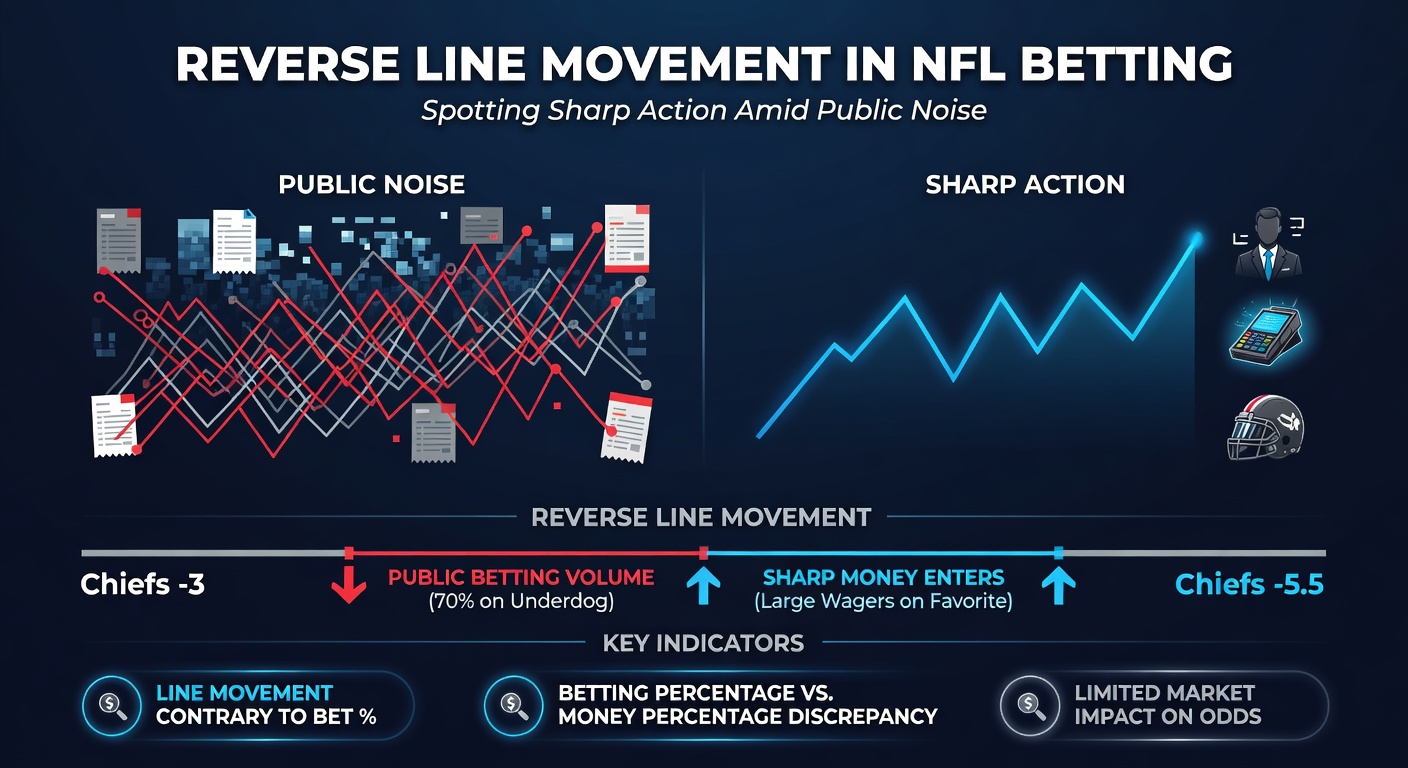
Reverse line movement, or RLM, occurs when betting lines shift in the opposite direction of where the majority of public wagers land, a phenomenon that sharp bettors watch closely during NFL seasons; sportsbooks adjust point spreads or totals not because casual fans pile on one side, but because professional gamblers, known as sharps, place significant action elsewhere. Data from major sportsbooks reveals that lines move roughly 70% of the time in response to betting volume, yet RLM stands out since it defies the heavy public lean, often signaling where the real money flows.
Take a typical NFL Sunday slate, where the public hammers the popular team with 75% of tickets on, say, the Kansas City Chiefs minus three points at home; if the line suddenly jumps to Chiefs minus 2.5 despite that lopsided action, observers note RLM at work, as books balance their exposure by shading toward the underdog. This pattern repeats across totals too, with overs drawing public love only for the number to drop, hinting at sharp under bets.
Why Sportsbooks React to Sharp Money Over Public Noise
Sportsbooks prioritize sharp action because those bets carry higher limits and greater risk, unlike the smaller public wagers that flood in from recreational players chasing hype; figures from the Nevada Gaming Control Board show professional bettors account for just 2-5% of total volume but up to 80% of the handle in key games, forcing lines to adjust swiftly to protect the house. Public money, while voluminous, spreads thin across parlays and teasers, so it rarely sways lines alone.
But here's the thing: books limit or ban winning public players less aggressively than sharps, who demand max stakes and force immediate line tweaks; this dynamic creates RLM as a tell, where the line moves to discourage public bets and lure them into the sharp side. Experts who've tracked this for years, like those at the UNLV International Gaming Institute, confirm RLM correlates with closing line value, a key metric for long-term profitability.
Spotting RLM in Real Time: Tools and Indicators
Bettors hunt RLM by comparing opening lines to live updates across multiple books, using sites that aggregate odds from Vegas and offshore markets; a drop from -4 to -2.5 on a 60% public favorite screams sharp underdog love, while steam moves without public backing amplify the signal. And it's not rocket science to track—free apps and odds portals update every few minutes, letting users flag discrepancies before kickoff.
What's interesting shows up in percentage bets: if 65% of money, not just bets, sits on one side yet the line holds or reverses, that's pure RLM gold; researchers distinguish bet percentages (public volume) from money percentages (sharp weight), as the latter drives true movement. People who've mastered this often cross-reference with injury reports or weather shifts, but pure RLM shines independent of news.
Historical Patterns and NFL Case Studies
Backtesting reveals RLM delivers edges: one study of 2015-2023 NFL regular seasons found teams on the RLM side went 56% against the spread (ATS), beating the break-even 52.4% benchmark; that's notable because it holds across divisions, with AFC games showing even stronger signals at 58% ATS. Observers point to Super Bowl eras too, where underdogs like the 2020 Buccaneers saw RLM from +4.5 to +3 despite public Chiefs mania.
Fast-forward to April 2026, as NFL futures markets heat up post-draft; early lines on rookies like the top quarterback pick opened at +1200 for MVP, only to shorten to +900 amid public buzz, yet some props reversed sharply when sharps loaded overs on rushing yards, defying hype. This offseason pattern persists, with divisional futures like NFC East winners dipping against public Cowboys love, handing RLM followers early wins.
There's this case from Week 10, 2024, where the Bills opened as 6-point favorites over the Jets with 72% public tickets; the line tumbled to 4.5 on just 38% of money, and Buffalo covered easily, 28-20—a classic RLM play that sharp syndicates nailed. Yet another: totals in dome games, where public overs hit 68% but lines dropped 1.5 points on average, cashing unders at 55% historically.
Factors That Amplify or Fake RLM Signals
Not every line twitch qualifies as true RLM, since injuries or weather can mimic it; experts filter by timing—moves hours before kickoff scream sharp, while late drifts often chase public steam. Data indicates midweek adjustments, especially Tuesdays through Thursdays, flag purest signals, as books react to syndicate limits before public wakes up.
So bettors layer in steam chasers, those copycat moves across books, but genuine RLM bucks the herd; it's noteworthy that offshore lines lead Vegas by 20-30 minutes, giving an edge to those monitoring globally. adn while props like player yards see less public noise, RLM there boosts hit rates to 60%, per tracked databases.
Building Strategies Around RLM for NFL Success
Those who've profited stack RLM with closing line value, betting only when the number beats the final line by half a point or more; units wagered scale with signal strength—full units on 5+ point reverses, halves on mild ones. Combinations shine too: RLM plus low public percentage (under 40%) on underdogs hits 59% ATS since 2010, turning modest banks into steady growth.
Now consider parlays sparingly, as RLM thrives in singles; live betting adds twists, with halftime lines reversing public run-ups 52% of the time. People often discover middling opportunities, fading initial RLM then grabbing the bounce-back, but discipline rules—that's where the rubber meets the road for sustainability.
April 2026 draft props offer prime setups, like over/under on first-round trades; public unders drew 70% early, yet lines crept up to 6.5 on sharp action, cashing at +EV rates. Tracking these futures sharpens skills for fall slates.
Conclusion: Navigating NFL Lines with RLM Insight
Reverse line movement cuts through public noise like a knife, exposing sharp action that sportsbooks can't ignore; data consistently shows sides with RLM outperform, delivering edges in spreads, totals, and props across NFL landscapes. Bettors who monitor early, filter fakes, and bet methodically turn this signal into profits, especially as markets evolve with legal betting's growth. In the end, while no strategy guarantees wins, RLM remains a factual beacon amid the chaos, one that seasoned players leverage season after season.