Probability Connections: Dice Mechanics and Point Spread Strategies for New Bettors
Carlo Werner · Aug 10, 2026
Probability Connections: Dice Mechanics and Point Spread Strategies for New Bettors
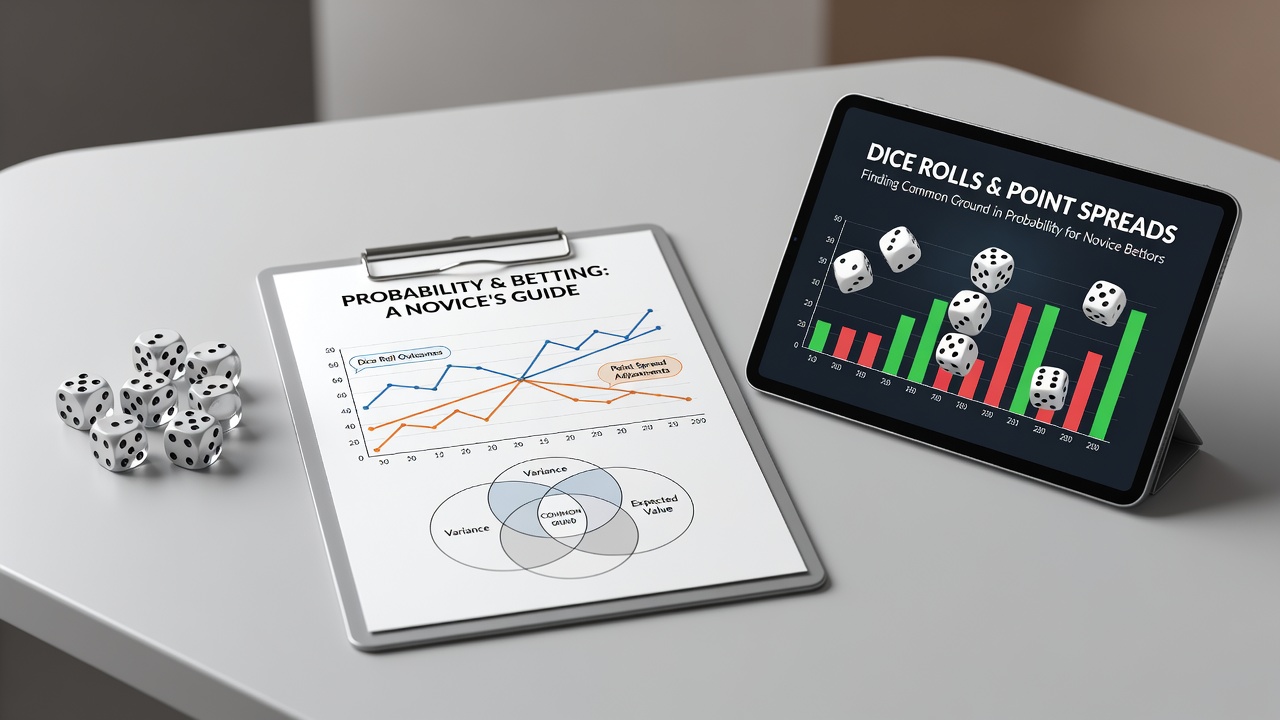
Novice bettors often encounter dice rolls in games like craps alongside point spreads in sports wagering, yet both rely on core probability principles that connect random outcomes to structured betting decisions. Observers note that understanding these shared foundations helps clarify how odds form and why certain wagers carry consistent edges over time.
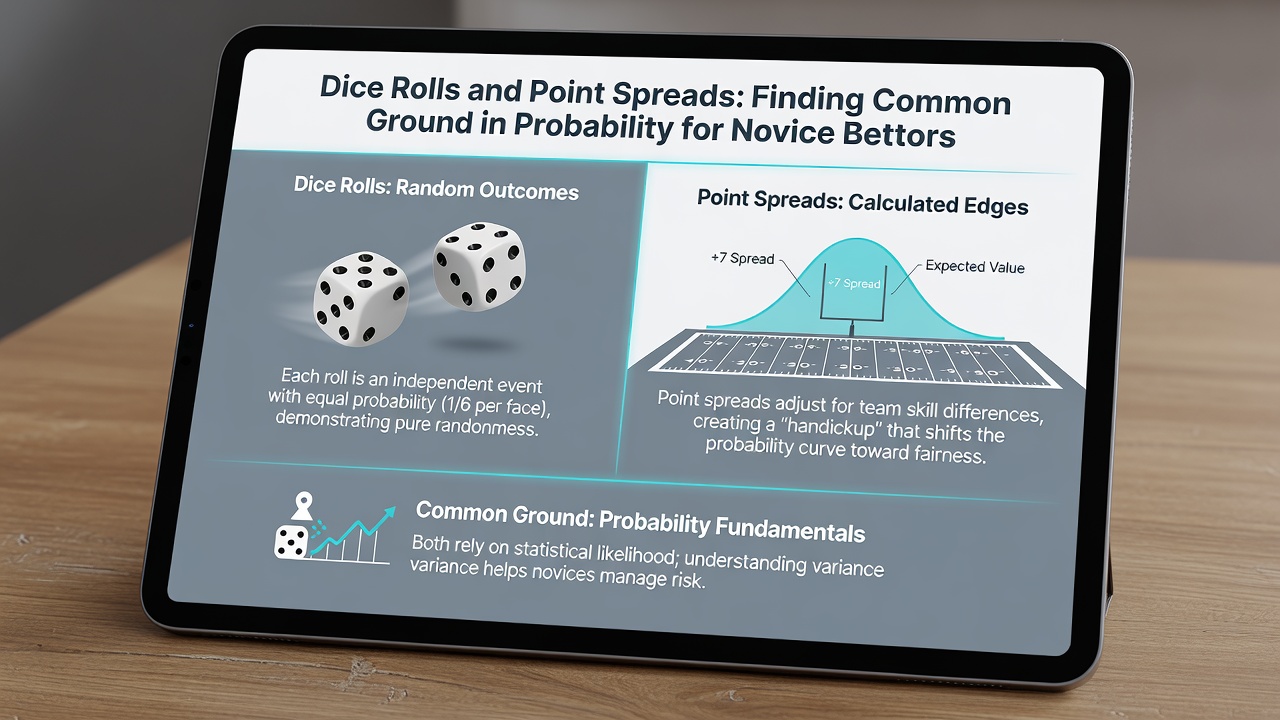
Dice mechanics operate through straightforward combinations where each face carries equal likelihood on fair six-sided cubes, and researchers calculate probabilities by dividing favorable results by total possibilities. For instance, rolling a seven occurs in six of thirty-six possible outcomes across two dice, which produces a 16.67 percent chance according to standard combinatorial math. Those who've studied this know that multi-roll sequences in craps build on these base rates, creating layered bets with varying house advantages that range from under 2 percent on pass lines to higher figures on proposition wagers.
Core Elements of Dice Probability
Basic craps setups demonstrate how independent rolls accumulate into session results, and data indicates that long-term frequencies align closely with theoretical distributions when thousands of trials occur. Experts have observed that players tracking streaks encounter the gambler's fallacy when assuming past rolls influence future ones, since each throw resets independently. Figures from gaming laboratories reveal that simulation software confirms these patterns hold across large sample sizes, allowing bettors to anticipate expected losses based on the edge percentage applied to wager volume.
Point spreads function differently yet share probability roots because oddsmakers set margins that reflect team strength differentials derived from historical performance data and statistical models. In sports like football or basketball, a spread of seven points means the favored side must win by more than that margin for bettors on that side to succeed, while the underdog covers if it loses by fewer points or wins outright. Research indicates that efficient markets price these spreads so each side wins roughly 50 percent of the time before the bookmaker's commission, which typically sits at 4.5 to 5 percent when standard -110 odds apply.
Point Spread Mechanics and Market Influences
Adjustments occur as betting volume arrives, and analysts adjust lines to balance action on both sides rather than predict exact margins. According to records from the Nevada Gaming Control Board, public money often clusters on favorites, prompting line movement that creates value opportunities on the opposing side when sharp money counters the trend. Those who examine historical spread accuracy find that closing lines serve as strong predictors because they incorporate the latest information available before games begin.
Common ground emerges when bettors apply probability concepts across both domains, since dice outcomes follow binomial distributions while spread results hinge on normal distributions around expected margins. One might notice that variance plays a larger role in single dice rolls compared to multi-game point spread parlays, yet both reward disciplined bankroll allocation to withstand short-term swings. In August 2026, industry analyses highlighted growing use of simulation tools that let novices model dice sequences and spread scenarios side by side, revealing how sample size requirements differ between the two formats.
Take one researcher who compared craps pass line bets to NFL spread wagers and found that both carry negative expected values once the house edge applies, which means repeated play leads to proportional losses over extended periods. Studies from the American Statistical Association confirm that variance decreases as the number of independent trials increases, so bettors who spread action across many small wagers experience outcomes closer to theoretical predictions. What's interesting is how correlation appears in point spread results when weather or injuries affect multiple games, whereas dice rolls remain fully independent unless physical bias exists in the equipment.
Practical Applications for Beginners
Novices benefit from calculating implied probabilities from betting odds and comparing them to true probabilities derived from models, and this process mirrors the conversion of dice combinations into percentages. Canadian gaming data shows that educational programs emphasizing these calculations reduce impulsive decisions among new participants. Bettors who track results in spreadsheets often discover patterns in their own performance that align with broader probability rules, such as the impact of chasing losses on overall return rates.
Line shopping across sportsbooks further reduces the effective edge in spread betting, just as selecting tables with favorable craps rules improves dice wager prospects. External resources like those published by the Australian Institute of Criminology provide comparative studies on how different jurisdictions regulate these edges and disclose payout structures. Observers note that consistent application of probability tracking, rather than outcome chasing, separates sustainable approaches from those that erode bankrolls quickly.
Conclusion
Probability serves as the unifying thread between dice rolls and point spreads, giving novice bettors a framework to evaluate both random events and market-derived margins through the same lens of expected frequency and variance. Data continues to demonstrate that education in these areas supports more measured participation regardless of the specific games chosen.