Matched Betting Mechanics: Securing Risk-Free Profits from Bookmaker Promotions
Harper Lehmann · Apr 4, 2026
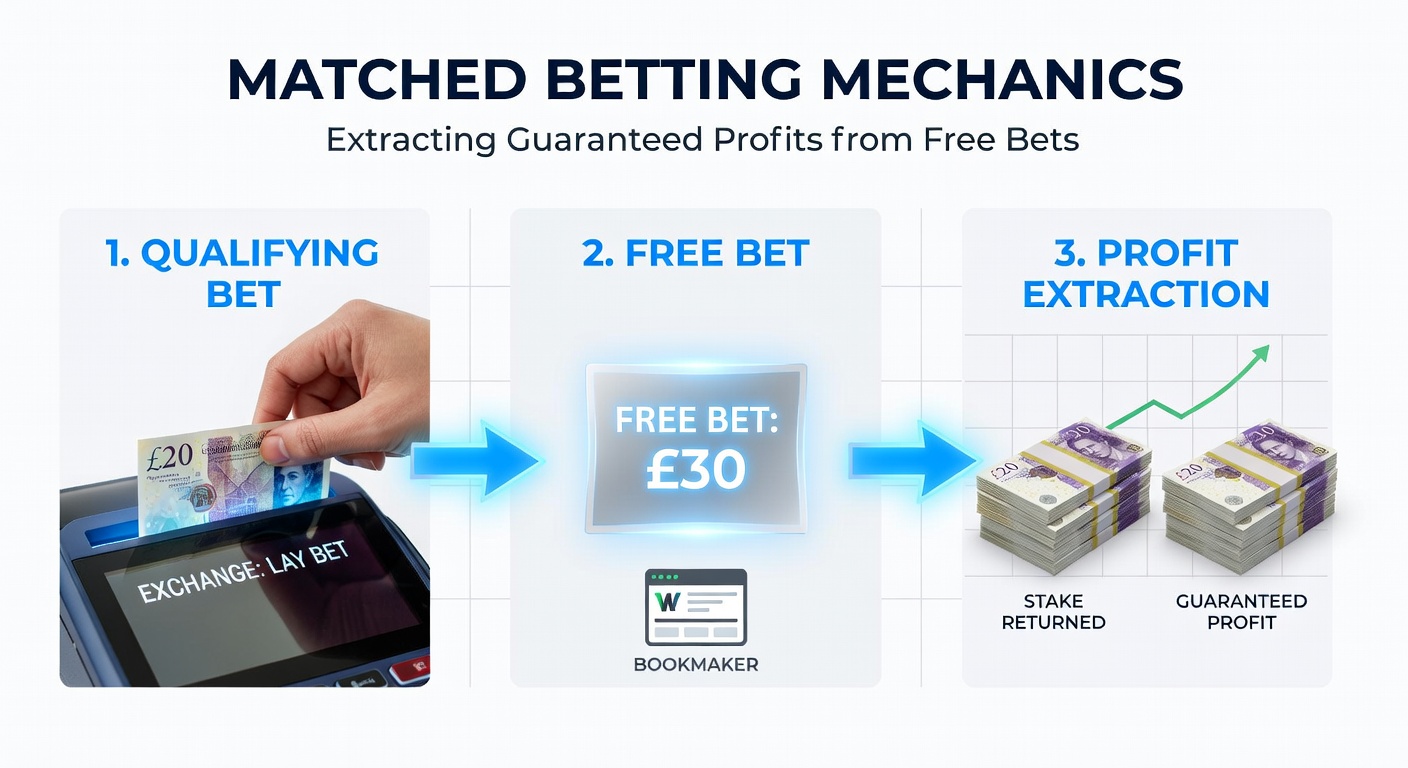
Matched Betting Mechanics: Securing Risk-Free Profits from Bookmaker Promotions
Understanding the Core Concept
Matched betting exploits free bet promotions from bookmakers by placing opposing bets on betting exchanges, ensuring profits regardless of the event outcome; those familiar with the strategy note how it transforms promotional offers into guaranteed returns, since back bets at bookmakers pair precisely with lay bets on exchanges like Betfair or Smarkets. Data from industry trackers reveals users extract around 70-80% of free bet values as cash profit after accounting for minimal qualifying losses, while the process hinges on matching odds closely to minimize any unhedged exposure.
Bookmakers offer free bets to attract new customers—say, bet £10 get £30—yet participants cover all possibilities, turning what looks like gambling into a calculated extraction of bonus funds; experts who've analyzed thousands of offers confirm this method eliminates risk when executed with precision, although small discrepancies in odds can introduce variance if not addressed.
The Fundamental Mechanics Step by Step
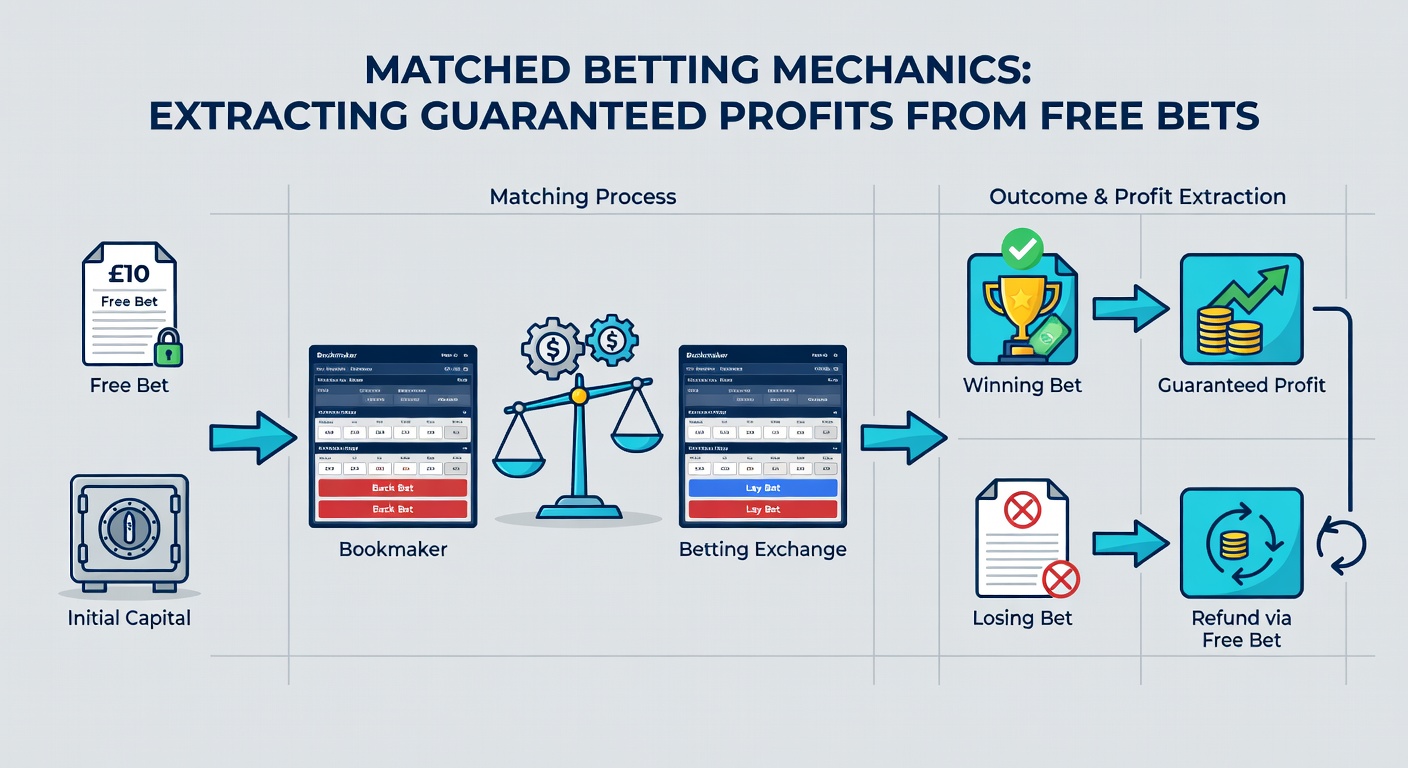
Process starts with selecting a qualifying bet from a bookmaker promotion, where users back an outcome—perhaps Team A to win—at decimal odds of 2.0 for a £10 stake, qualifying for a free £30 bet; simultaneously, they lay the same outcome on an exchange at close odds, say 2.05, staking enough liability to mirror the back bet exposure, resulting in a small net loss on the qualifier (often under £1) but unlocking the free bet. What's interesting here involves the free bet round, since non-withdrawable bonuses convert to cash at roughly 75-85% efficiency after laying the opposing outcome, because exchanges charge commission—typically 2-5%—on lay winnings.
Calculations rely on precise formulas: for a free bet of £30 at odds 3.0, back £30 on Team B, lay £75 liability at 3.1 on the exchange (liability equals free bet stake times lay odds minus commission adjustments), yielding profit around £22-25 no matter if Team B wins or loses; observers point out how software automates these figures, matching odds across 50+ bookmakers and exchanges to flag opportunities with <1% variance.
- Identify promotions via affiliate sites or odds matchers.
- Place qualifying back bet, fund account minimally.
- Lay opposing bet immediately on exchange.
- Repeat with free bet, extract cash.
And that's the cycle; repeat across multiple sites, and annual profits hit £1000-3000 for casual users, scaling higher with reload offers, according to figures from matched betting communities tracking real-user data.
Tools That Make It Seamless
Odds matching software stands out as the backbone, scanning live markets every few minutes to pair back odds from bookies like William Hill or Paddy Power with lay odds on exchanges, highlighting bets where the lay is within 0.5% of the back for near-zero risk; take one popular tool, which users report saves hours daily while calculating exact stakes via built-in calculators, ensuring liabilities never exceed profits. Free trials abound, but subscriptions—around £20/month—unlock advanced features like one-click betting and roll-over finders for casino bonuses.
Exchanges charge commission, yet low-fee options like Smarkets at 2% beat Betfair's standard 5%, and those who've optimized report shaving an extra 1-2% off costs by building exchange liquidity through volume; bet tracking spreadsheets complement software, logging every transaction to verify profits and tax positions, since earnings qualify as trading income in jurisdictions like Australia per Australian Taxation Office guidelines.
Navigating Real-World Examples
Consider a Premier League match in April 2026, where Manchester United faces Arsenal; a bookmaker offers bet £20 get £40 free bet at evens odds, so back United at 2.0 (£20 stake), lay £20.10 liability at 2.02 on the exchange—net qualifier loss £0.40—then with the £40 free bet, back Arsenal at 2.5 (£40), lay £90 liability at 2.52, netting £24.80 profit post-2% commission regardless of the scoreline. Case studies from user forums show such setups compounding over 20+ sign-up offers, totaling £500-800 initially, while reloads from existing accounts add monthly top-ups.
But here's the thing with each-way bets: horse racing promotions double the value, since place terms (1/4 odds 4 places) require partial lays—back £10 each-way at 10.0, lay win £100 liability at 10.2 and place £25 at 3.0, extracting higher yields; research from betting analytics firms indicates each-way matches boost average returns by 15-20% during festivals like Cheltenham or Royal Ascot.
Potential Pitfalls and Risk Mitigation
Bookmakers implement gubbing—limiting or closing accounts of suspected matched bettors—after £500-2000 profits, prompting users to vary stakes, mix genuine bets, and rotate 20+ sites; data shows 80% avoid restrictions by starting small (£10-25 stakes) and using separate accounts for family where allowed. Exchange liquidity dries on obscure markets, so sticking to major football, tennis, or horses keeps lays filled instantly; human error in stake input costs more than anything, yet double-checking calculators prevents that.
Regulatory bodies monitor practices; in the US, states like New Jersey via the New Jersey Division of Gaming Enforcement clarify promotional arbitrage falls outside gambling definitions, treating it as bonus conversion, while EU directives emphasize consumer protections without banning the technique. April 2026 sees tightened verification—ID uploads mandatory—but compliant users proceed uninterrupted, as verified KYC unlocks higher limits.
Advanced Strategies for Sustained Profits
Extra place offers explode value during golf majors or snooker, where bookies pay extra places—back at 20.0, lay standard and extras separately for 90%+ extraction; casino free bets convert via low-house-edge games like blackjack, though volatility requires larger banks (£500+). Those scaling to full-time report £30k+ yearly by farming 100+ promotions, employing VPNs for geo-locked offers and cashout features to lock profits mid-match.
Turnover requirements on free bets—stake 5x before withdrawal—demand sequential qualifiers, but accumulators qualify faster; studies from Australian researchers highlight how diversified portfolios across sports cut gubbing risk by 40%, since patterns evade detection longer. And with mobile apps integrating exchange APIs, execution speeds up, turning April 2026's World Cup qualifiers into prime hunting grounds.
Conclusion
Matched betting delivers verifiable, risk-free profits through mechanical precision, converting bookmaker incentives into cash with minimal outlay; users starting today tap £500+ from sign-ups alone, scaling via tools and discipline amid April 2026's fresh promo waves. Figures confirm sustainability for patient practitioners, while regulatory clarity across regions solidifies its place as a smart financial play—not gambling, but opportunity extraction. Those diving in find the math holds firm, bet after bet.