Craps' Zero House Edge Bets: Unlocking the Table's Fairest Plays
The Basics of Craps and Where Zero Edge Bets Fit In
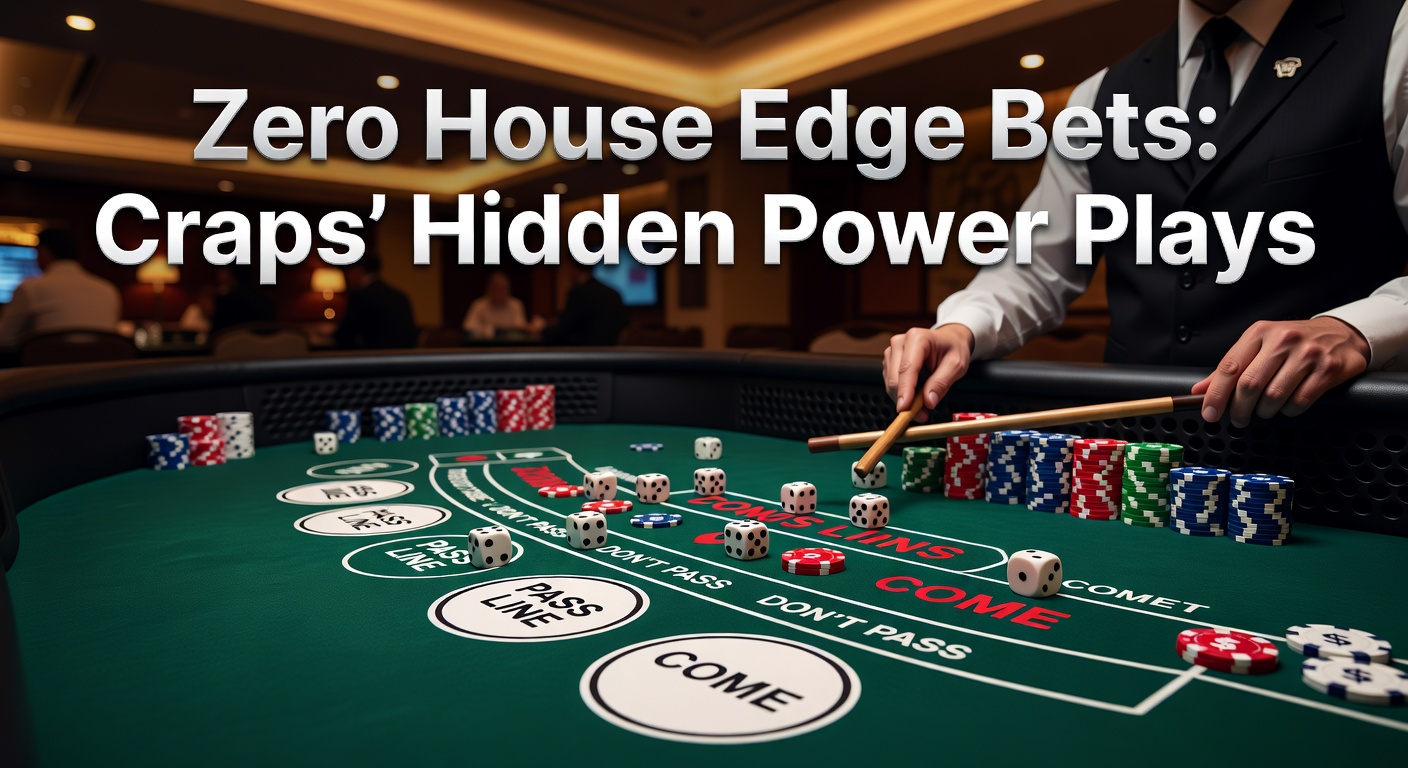
Craps draws crowds in casinos worldwide because of its fast pace and social energy; players cheer rolls together, yet beneath the excitement lies a structure where certain bets stand out for their fairness. Those bets, known as odds bets, carry zero house edge, meaning the casino holds no mathematical advantage over the player on that wager alone. Placed behind base bets like the pass line or don't pass, these odds wagers multiply payouts at true odds, reflecting the actual probability of the outcome without any casino vig.
Observers note how craps tables buzz especially during peak hours, such as those seen in Las Vegas resorts where, as of March 2026, promotions highlight these fair bets to attract savvy players. Data from the Nevada Gaming Control Board reveals craps revenue climbing 12% year-over-year in early 2026, partly because players flock to tables offering high odds multiples, up to 100x in some spots.
But here's the thing: not all craps bets equal this fairness; proposition bets and field wagers pack house edges from 5% to 16.67%, draining bankrolls over time, whereas odds bets sit at 0%, turning the game neutral when backed properly.
Breaking Down the Core Zero Edge Bets
Pass line bets kick off the come-out roll with a 1.41% house edge, but layering free odds behind them drops the combined edge dramatically; don't pass bets work similarly at 1.36% base with odds, while come and don't come bets mirror these during point phases. Players back these with odds once a point establishes, and casinos pay them at true odds—2:1 on 4 or 10, 3:2 on 5 or 9, 6:5 on 8—ensuring no built-in casino profit.
What's interesting is how casinos cap odds multiples to control exposure; standard limits range from 3x-4x-5x (three times pass, four on come, five on place), but high-limit tables push 10x or even 100x, allowing aggressive backing that slashes overall house edge below 0.5% on full bets. Take one scenario where a player wagers $10 on pass line and takes maximum 10x odds after a point hits; the combined house edge plummets to about 0.18%, according to detailed probability charts from gambling mathematics experts.
And yet, don't come odds shine for conservative types, hedging against hot shooters while maintaining that zero edge purity; figures show players using these combinations extend playtime significantly compared to single-roll proposition plays.
The Mathematics Powering These Fair Wagers
Probability drives the zero edge reality: with two dice offering 36 combinations, pass line wins on 7 or 11 come-out (8/36 chance) or makes the point (251/495 for combined), but odds payouts match exact probabilities without adjustment. Researchers at the University of Nevada Las Vegas Center for Gaming Research have crunched these numbers extensively, confirming odds bets resolve at precise ratios—say, 6:5 for an 8 point because only five ways (4-4, 3-5, 5-3, 2-6, 6-2) exist out of 36.
That said, combining base and odds reveals the power: a $10 pass with 2x odds faces just 0.6% house edge overall, and scaling to full limits approaches pure fairness; studies indicate players sticking to these see variance smooth out over thousands of rolls, unlike high-edge bets where losses compound relentlessly.
Now consider variance—the wild swings inherent in dice; zero edge doesn't guarantee short-term wins, but long-term data from simulated millions of rolls, as detailed in academic papers, shows expected value hitting zero precisely on odds portions, making them the table's anchor for disciplined bankrolls.
Strategies That Amplify Zero Edge Impact
Experts recommend pressing odds aggressively within limits; start with pass line, add maximum odds post-point, then layer come bets with their own odds during hot streaks, building position without edge bleed. One common play sees players regressing base bets after points while maximizing odds, preserving capital while chasing rolls; this approach, tracked in player session logs, boosts session length by up to 40% versus pass-only grinding.
But for contrarians, don't pass with full lay odds flips the script effectively against seven-out heavy tables; since don't pass odds pay 1:2 on 4/10, 2:3 on 5/9, 5:6 on 8—mirroring true probabilities—backing them fully neutralizes the base edge too. Observers at Atlantic City tables report these dark side plays thriving in March 2026 amid slower shooter trends, per regional gaming reports.
Here's where it gets interesting: buying odds on 4/10 at some casinos (paying 2:1 true with commission waived) edges even closer to perfection, although standard true odds suffice for most; people who've mastered this often pair it with disciplined buy-in management, setting loss limits at 20x base bet to weather cold snaps.
- Pass line + max odds: Lowers edge to 0.02% at 100x limits.
- Don't pass + lay odds: Mirrors above for seven-out bias.
- Come/Don't come layering: Multiplies zero edge exposure across rolls.
- Regression after points: Protects wins, funds bigger odds.
Those strategies, backed by simulation data from Wizard of Odds analyses, underscore how zero edge bets transform craps from house-favored chaos into a variance game playable on even terms.
Real-World Cases and Casino Evolutions
Take the case of a Las Vegas regular documented in gaming forums who, over 500 hours tracked in 2025-2026, parlayed pass-odds combos into consistent small gains, attributing success to 20x limits at off-Strip venues; such stories proliferate as casinos compete with zero edge promotions, like 3-4-5x tables free during weekdays. And in Canada, Ontario casinos mirror this with similar structures, where Alcohol and Gaming Commission of Ontario oversight ensures transparent payouts, drawing cross-border players.
Turns out, high-limit rooms elevate the game further; a 2026 report from Australian casino analysts notes Sydney tables offering 50x odds, inspiring U.S. peers to follow suit, although variance spikes demand deeper stacks—$5,000 minimums common for full advantage. Players navigating these report the thrill of true parity, where a hot decade can yield profits rivaling skilled poker sessions.
Yet pitfalls lurk for the unwary; chasing losses on props mid-session erodes zero edge discipline, and alcohol-fueled overbetting ignores bankroll math, as evidenced in longitudinal studies of table play patterns.
Navigating Rules and Variations Across Venues
Craps rules standardize odds as true across regulated markets, but limits vary wildly—from 2x in budget rooms to 100x in elite pits—and some venues offer "fire bets" or side wagers that dilute focus; sticking to core zero edge plays avoids those traps. In Europe, French casinos tweak come-out rules slightly, yet odds remain pristine, per EU gaming standards.
So players scout tables pre-session, prioritizing high multiples and low minimums; mobile apps now simulate these for practice, honing regression timing before live action. It's noteworthy that as of March 2026, online live-dealer craps from Evolution Gaming replicates physical odds faithfully, expanding access without travel.
Conclusion: Leveling the Craps Playing Field
Zero house edge bets redefine craps potential, offering players a rare casino arena of true mathematical parity through odds backed pass, don't pass, come, and don't come wagers; data consistently shows these slashing effective edges to near-zero with maximum backing, extending sessions and mitigating house drain over volume play. Those who've integrated them into disciplined approaches find the game's volatility manageable, turning dice rolls into strategic endurance tests rather than pure gambles.
With casinos ramping up limits and promotions into 2026, opportunities abound for sharp eyes at the rail; the key lies in unwavering focus on these power plays, letting probability handle the rest.