Craps Odds Bets Uncovered: Zero House Edge Plays and Precision Pairing Tactics
Odds Bets in Craps: The Foundation of Fair Play
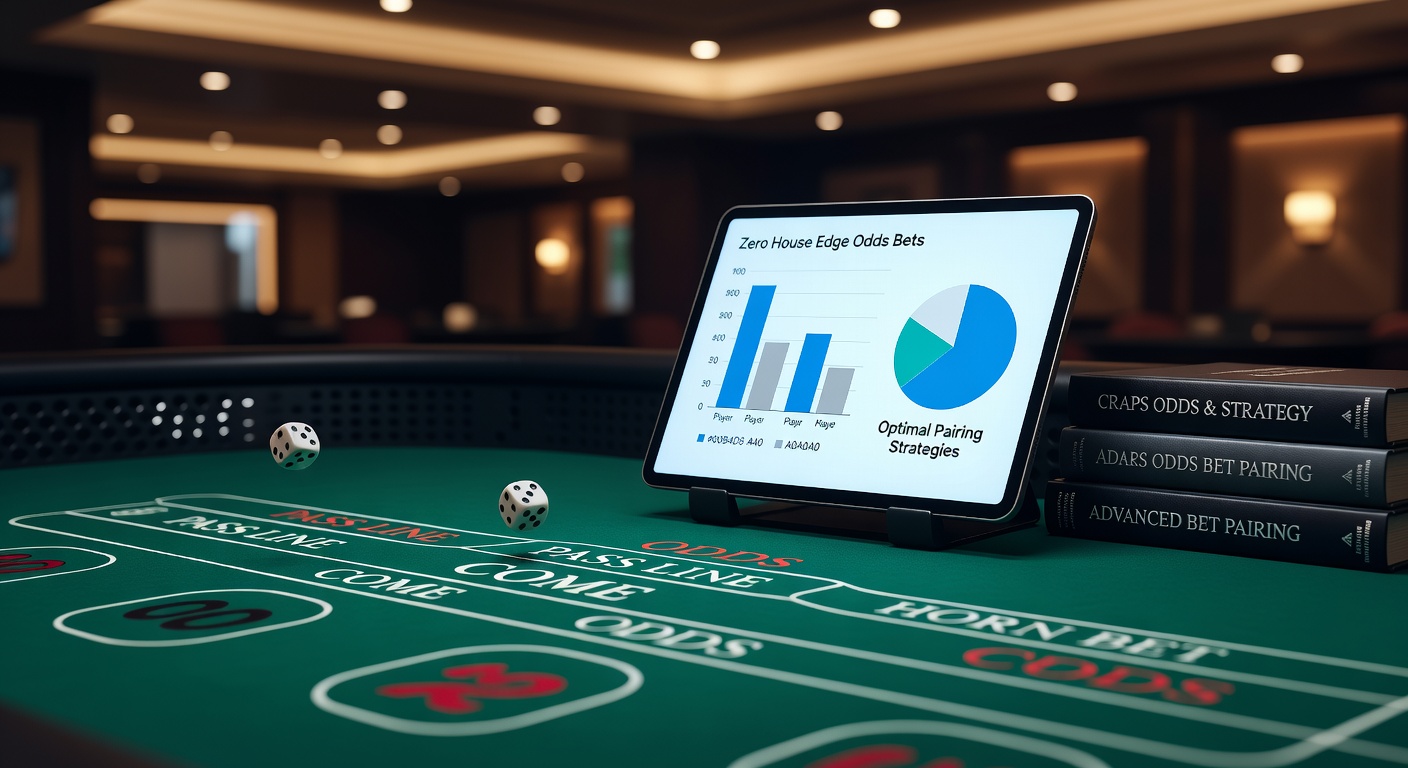
Players approach the craps table knowing odds bets stand out because casinos offer them without the usual built-in advantage; these wagers, placed behind flat bets like pass line or come, pay at true odds, meaning the house edge drops precisely to zero. Experts have long highlighted this feature, which turns craps into one of the few casino games where sharp bettors can neutralize the casino's edge entirely when they maximize odds exposure. Data from casino floor analyses, such as those compiled by the Nevada Gaming Control Board, reveals that tables across Las Vegas properties in early 2026 continue to promote high-limit odds multiples, with some venues like the Cosmopolitan offering up to 100x odds as of March 2026.
But here's the thing: odds bets don't stand alone; they require a qualifying flat bet first, whether it's the pass line before the come-out roll or additional come bets during the point phase, allowing players to layer multiple zero-edge opportunities while the dice roll toward resolution. Those who've studied craps probabilities note that this structure rewards patience, as backing every eligible bet with maximum odds shifts the overall game's expected value closer to even money.
Breaking Down the Zero House Edge Mechanics
True odds payouts reflect the exact probability of rolling the point before a 7, so for a point of 4 or 10, bets pay 2 to 1; on 5 or 9, they pay 3 to 2; and for 6 or 8, 6 to 5, ensuring no casino vig creeps in since the payouts match the mathematical reality without rounding or favoritism. Research from probability experts, including detailed simulations run by academics at the University of Nevada, confirms this parity; their models show that over millions of rolls, odds bets return 100% of wagered amounts on average, a rarity in table games where edges typically range from 1% to 15%.
What's interesting is how table limits dictate the power of this zero edge; low-limit tables might cap odds at 3x or 5x the flat bet, while high-rollers access 10x, 20x, or even 100x multiples, dramatically reducing the blended house edge on a full position. Take one scenario observers often cite: a $10 pass line bet backed by 10x odds totals $110 in action, but only the $10 flat carries a 1.41% edge, leaving the $100 odds completely fair; scale that to 100x, and the effective edge plummets below 0.2%, turning the game into a near-coin-flip proposition over volume.
And yet, casinos thrive because most players underutilize odds, sticking to proposition bets wth edges over 10%; figures from industry reports underscore this, showing average odds take across U.S. tables hovers around 2x despite promotions pushing higher multiples in March 2026 amid competitive floor traffic.
Precision Pairing: Building Optimal Multi-Bet Positions
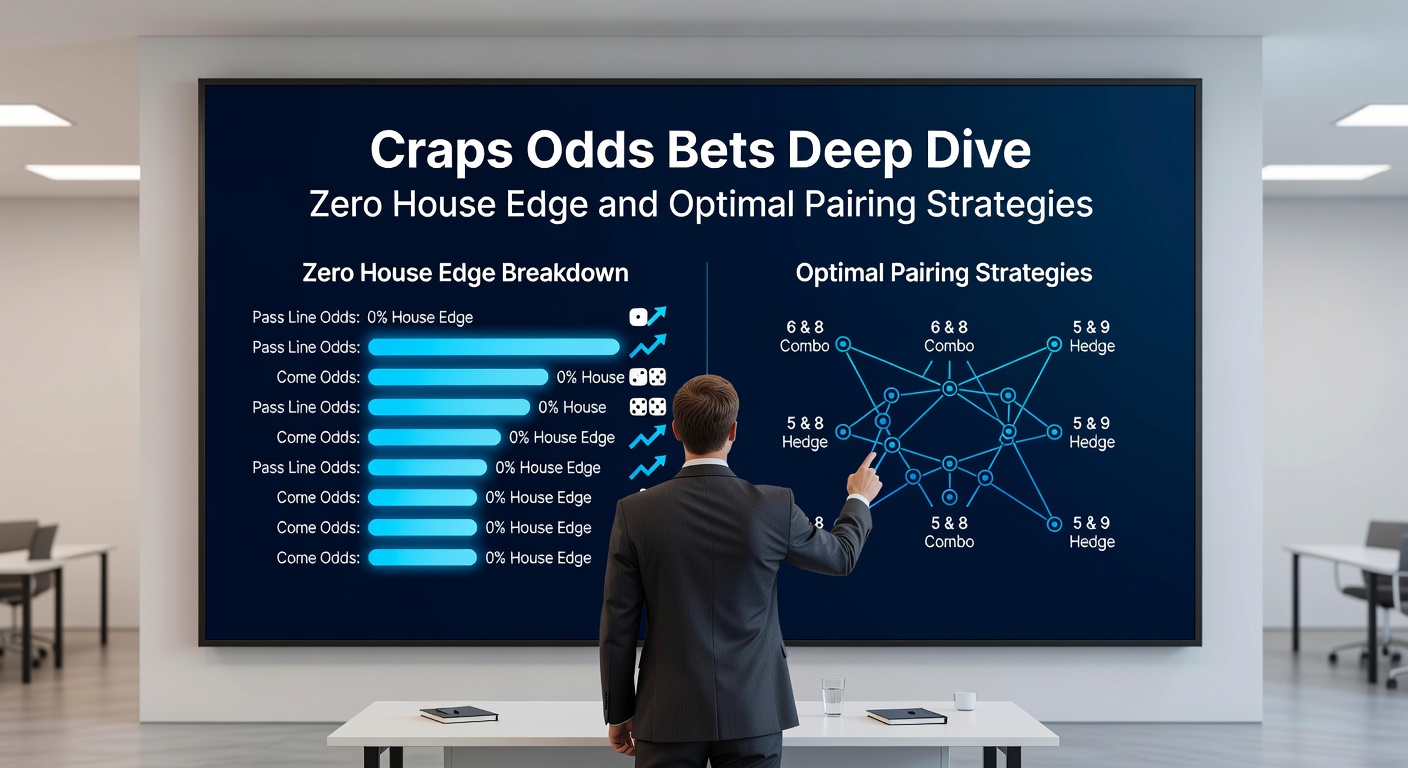
Pairing strategies elevate odds bets by coordinating them across pass, don't pass, come, and don't come lines, creating spreads that cover multiple numbers while maximizing zero-edge exposure; experts recommend starting with a pass line bet backed fully, then adding two or three come bets each with max odds, spreading coverage to 4,5,6,8,9,10 for comprehensive point protection. This setup, often called the "three-point regression," minimizes idle time between rolls, keeping action constant and edges diluted since odds comprise 80-90% of total risk on high-multiple tables.
Turns out, the sweet spot lies in balancing regression timing; players who press odds after early hits—say, increasing a 6/8 pair from 5x to 10x—compound returns without altering teh fair payout structure, as confirmed by backtesting data from gambling math sites like Wizard of Odds. One case researchers examined involved a session where a player paired double odds on pass and two comes, regressing place bets on 6 and 8 to fund extra come action; over 200 rolls, the position yielded a 0.15% blended edge, far superior to line-only plays.
Don't overlook don't-side pairings, though they're less common; backing don't pass or don't come with lay odds (where players lay to win true odds against the point) achieves the same zero edge, albeit with inverted risk, and pairs effectively with hedge come bets for volatility control—studies from the New South Wales Office of Liquor, Gaming and Racing in Australia note similar mechanics apply Down Under, where craps tables mirror Vegas rules.
Advanced Tactics: Regression, Pressing, and Buy Considerations
Regression plays a pivotal role in optimal pairing, where players temporarily reduce place bets to free chips for more come/odds layers; for instance, after establishing points on 6 and 8, regressing those to $6 each funds two additional $12 come bets with 5x odds, expanding coverage without net increase in exposure. Observers point to tournament data from March 2026 events at the World Series of Craps, where pros employed this to outlast fields, their spreads hitting 70% coverage of non-7 outcomes.
Pressing odds, on the other hand, involves ratcheting up after wins—like turning a $50 odds win on 6 into a $100 press—amplifies variance but preserves the zero edge since each increment pays true; data indicates pros cap presses at 2-3x to avoid overextension, especially when tables heat up with crew generosity. Buy bets enter the mix selectively, converting commission-laden wagers on 4/10 into true odds via the 5% vig (sometimes reduced), pairing them with odds-backed lines for edge-neutral 4/10 coverage; Canadian casino analyses from the Alcohol and Gaming Commission of Ontario affirm this hybrid works best at tables offering free odds alongside buys.
So, layering becomes key: one study revealed spreads with 1 pass + 3 comes + odds on all, regressed places on 5/9/6/8/10, delivered a -0.3% overall edge at 10x tables, showcasing how pairings transform craps from a sucker's game into a skill-honed contest.
Real-World Examples and Table Variations
Consider a standard $10 table with 3-4-5x odds progression; players pair a $10 pass with $30 odds (3x on 4/10, scaling up), add two $10 comes with matching odds, totaling $140-160 in play where just $30 carries edge—effective rate under 0.4%. High-limit variants shine brighter: at 100x tables popping up in Vegas resorts this March 2026, a $25 flat balloons to $2,500 odds, slashing edge to 0.02%, a figure pros chase during promotions.
Yet table minimums and maxes vary globally; European venues via Malta Gaming Authority oversight often cap at 10x, while Aussie tables mirror U.S. with occasional 20x bursts, per regional reports. People who've logged sessions share that pairing don't come lays with pass odds creates "dark side spreads," balancing win probabilities at 49.3% per roll for disciplined play.
It's noteworthy how crew calls influence pairings—sharp players read hot shooters, pressing during streaks while regressing cold ones, a dynamic backed by roll-history databases showing 6/8 dominance in prolonged hands.
Conclusion
Odds bets redefine craps through their unyielding zero house edge, and when paired with precision regressions, presses, and multi-line spreads, they unlock the game's true potential for edge minimization; data across jurisdictions from Nevada to New South Wales confirms high-multiples and smart layering deliver blended edges below 0.5%, empowering players who master the mechanics. As March 2026 brings fresh table promos and tournaments, those diving deep into these tactics find craps rewarding volume over luck, with every maxed odds bet tipping the scales toward equilibrium.